The most common reflex is to start with the machine. It should be the opposite: first define the contaminant to remove and the target cleanliness, then derive the process, and only then the equipment. This guide lays out the method.
Start from the contaminant, not the machine
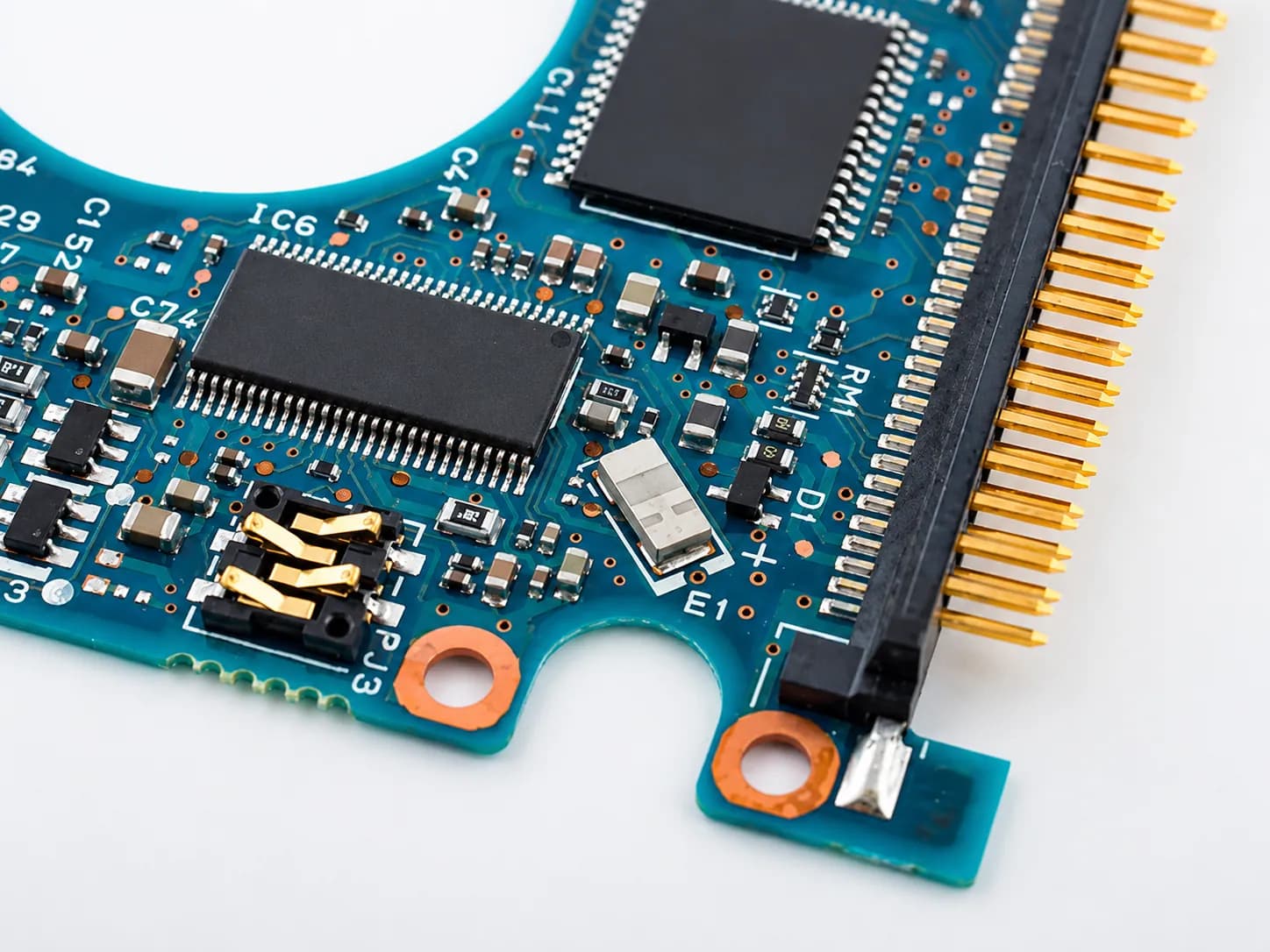
An assembled board rarely carries a single type of soil. Depending on the assembly process you find flux residues (no-clean or water-soluble), unreflowed solder paste, ionic traces, sometimes conformal coating or gel residues. Each behaves differently against chemistry, temperature and mechanical agitation.
Identify the contaminant first
- Flux type (no-clean, water-soluble, resin) and its datasheet.
- Component density and low-standoff packages (BGA, QFN).
- Component sensitivity to water, temperature and ultrasonics.
- Final cleanliness requirement: cosmetic, functional or standardised (ionic residues).
Process selection criteria
| Process | Strength | Watch-out |
|---|---|---|
| Immersion + agitation | Gentle, uniform | Hard-to-reach under-component areas |
| Ultrasonics | Fine penetration | Sensitivity of some components |
| Spray under immersion | Directed mechanical action | Nozzle and flow tuning |
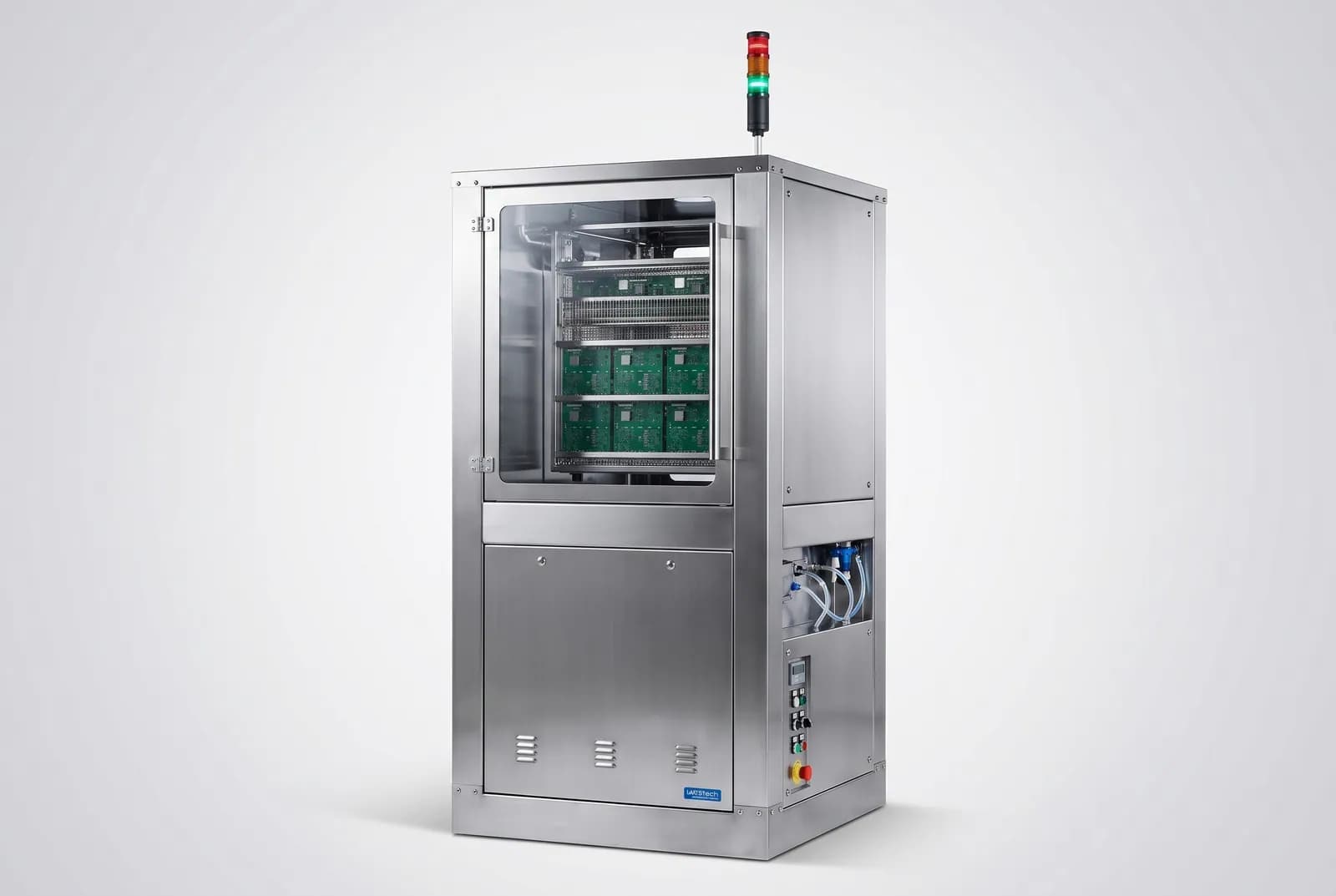 Related productsNC25Defluxing and PCB cleaning by spray under immersion
Related products
Frequently asked questions
Should a board assembled with a no-clean flux be cleaned?
"No-clean" means the residue is designed to remain harmless under given conditions. As soon as reliability, cosmetics or a later step (coating, bonding) requires it, cleaning becomes relevant again. The decision is made case by case, by measuring cleanliness.
Ultrasonics or spray under immersion for dense boards?
Ultrasonics offer fine penetration but require checking component sensitivity. Spray under immersion brings directed mechanical action, effective under low-standoff packages. The choice depends on the board: a trial decides.